How do I land in Bumpy Flight?
Start the descent early and in throttle steps, line up visually before the runway, then near-idle throttle with gentle S taps over the threshold. Arriving high and fast is the top cause of failed landings.
Flying
The two phases that end runs, with the exact pattern for each.
Updated
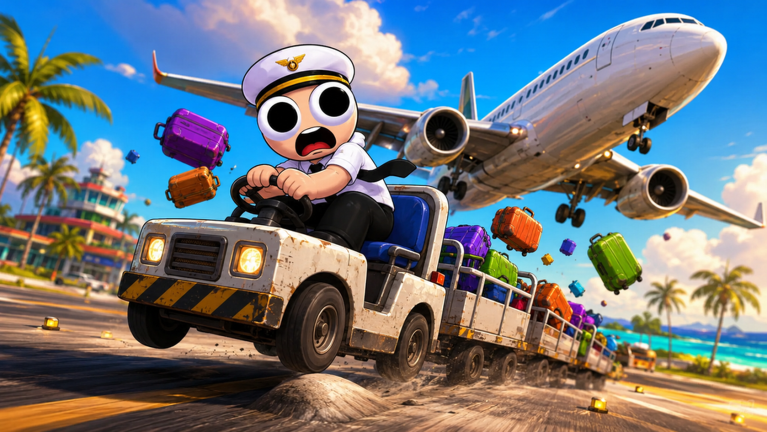
Takeoff is gated by the TASKS panel: bags loaded, passengers boarded, fuel at 100. In a crew, run bags and fuel in parallel with boarding; solo, run them in the order that keeps you near the plane for boarding last.
Announce the takeoff in a crew so nobody is mid-aisle when throttle comes up — an unbuckled crew is the cheapest way to lose the cabin you just built.
Six inputs get any flight airborne: Shift held for runway speed, a single W tap at rotation, a shallow climb, level-off. The trap list is short: a held W (stall), a mid-takeoff Ctrl tap (throttle cut), and turning before altitude (wing in the dirt).
Keep climbing shallow until you have real altitude. Altitude is the buffer that converts every later mistake into a recovery.
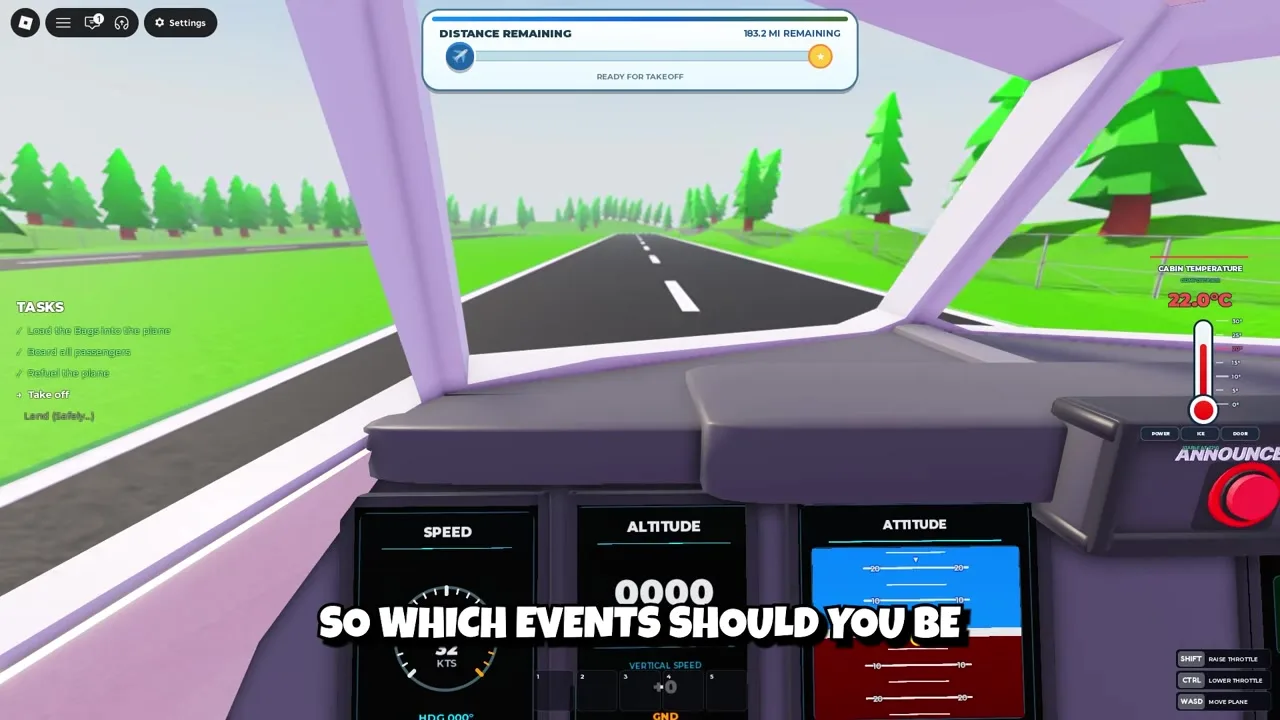
Cruise is a plateau, not a fight. Set pitch, set throttle, and make corrections in taps. Watch DISTANCE REMAINING, not the terrain — near the reported altitude ceiling, straight flight beats island-following, and the counter is the only honest measure of progress.
Events cluster in this phase: turbulence, cold snaps, outages. The cruise pilot's job is to stay boring through all of them.
The single biggest landing-killer is arriving high and fast. Start down while the destination is still far: cut throttle in steps, trade altitude for alignment, and give yourself a low, slow arrival at the runway threshold.
Use the airport signage as your visual gate: if you can read it, you're close — but by then your descent should already be underway.
Over the runway, throttle to near-idle and tap S in small taps, letting the plane settle. Hold your line — a drift at touchdown becomes a wing strike.
If the approach has gone wrong, going around is always free: throttle up, climb, and reset the pattern. A second approach costs two minutes; a crash costs the whole run.
The run completes at the landing — Flight Complete pays the XP and coins that drive progression. Check the summary screen for your payout and cabin state; comfort maintained through the flight is the difference between a routine and a strong payout.
Then debrief in one sentence: what nearly killed this flight? That sentence, repeated, is how crews get good.
FAQ
Start the descent early and in throttle steps, line up visually before the runway, then near-idle throttle with gentle S taps over the threshold. Arriving high and fast is the top cause of failed landings.
A held W. The aircraft keeps momentum from every input, so a long pitch-up turns into a stall right after rotation. Tap W once the plane feels light, then ease the climb.