What order should a crew handle emergencies?
Aircraft first, passengers second. The pilot stays on the controls, one player takes each prompt, and repairs (engine, power box) rank ahead of comfort. A dead crew serves nobody.
Chaos
Drill each event until the response is reflex: who moves, what they carry, what the pilot does.
Updated
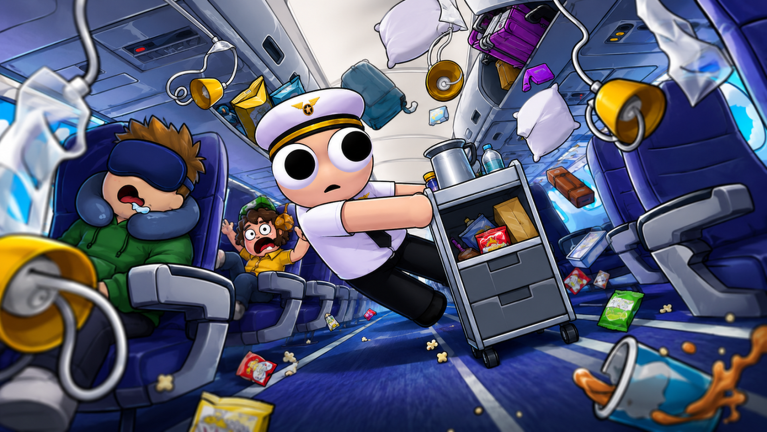
Every emergency drill starts the same: pilot stays on the controls. Then one named player takes the prompt, does exactly one action, and reports completion. The wipe scenarios all begin with role confusion; the landings all begin with the pilot's voice saying who takes what.
Drill it in calm flights: call a fake event, run the response, reset. Crews that rehearse in peace answer in chaos.
Ice events have two fronts. Wings: one player takes the IceScraper outside and clears the frost. Cabin: blankets go to shivering passengers, Medicine to the ones who ask. The pilot holds a steady, gentle pitch — turbulence rides along with cold in current footage.
Two players can split the fronts in parallel; solo players do wings first (aircraft survival) then cabin (comfort).
When systems go dark, the wrench goes to the power box at the rear of the aircraft. One player takes it; the pilot keeps flying; the cabin holds its last state — lights out means nothing worse is happening, it means something isn't done yet.
The drill is a walk: wrench, walk back, hold the repair, report, return to station. Ten seconds of work and a minute of walking — which is why crews pre-position the engineer mid-ship.
An engine failure warning names an engine. The engineer moves once — callouts decide this drill: "engine left" sends one player to the correct nacelle the first time. The pilot keeps the working engine steady and the wings level; the cabin stays seated.
In weather, this is the wipe scenario: storm plus engine failure plus open doors. The drill stays the same, the discipline just has to be louder.
Turbulence is a pilot drill: hold altitude with taps, make no large corrections, and let the cabin finish what it's doing. Storms add damage checks after — the engineer walks the airframe once clear.
Never fight turbulence with big inputs. Every large correction becomes a new problem; every held key becomes a stall.
Solo is one player running every drill in sequence: stabilize first, always. Then the single action the prompt names, then back to the seat. The solo wipe comes from trying to fly and fix simultaneously — nothing in the game requires it.
Practice the solo cold snap until the order is reflex: wings, then cabin. Aircraft survival is always the front that ends runs.
FAQ
Aircraft first, passengers second. The pilot stays on the controls, one player takes each prompt, and repairs (engine, power box) rank ahead of comfort. A dead crew serves nobody.
The one-action rule: stabilize the plane, leave the seat only for the single action the prompt names, and return. Never try to fly and fix at the same time.